
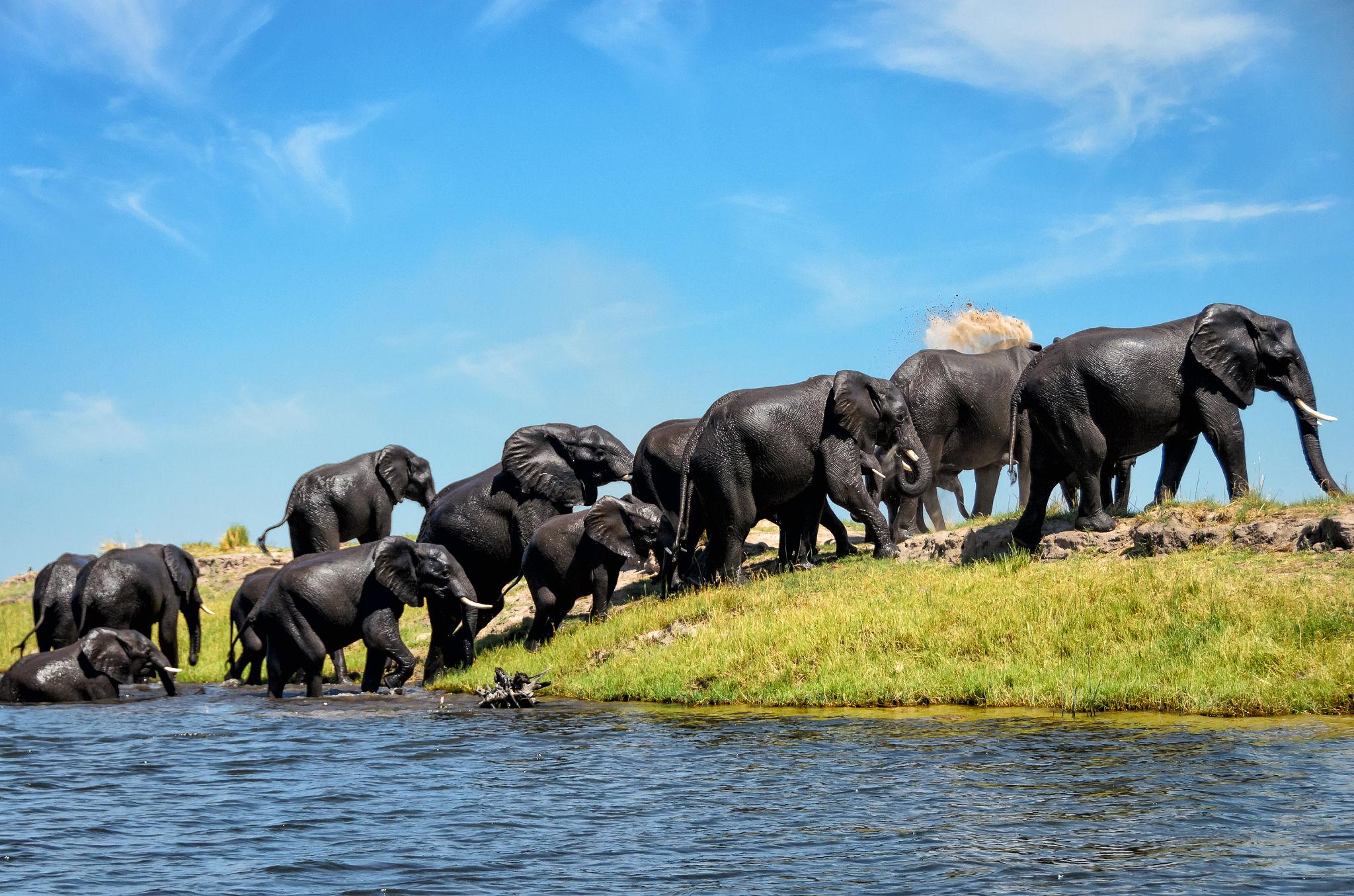
Welcome to the ZamWander Safaris Victoria Falls and Livingstone Travel Guide. Whether you are planning your first visit to the magnificent Victoria Falls, arranging a wildlife safari, or exploring the wider Southern African region, this guide will help you prepare for a memorable journey.
Discover when to visit, what to expect on the Zambian and Zimbabwean sides of the Falls, how to prepare for border crossings, what to pack, and how to plan popular experiences such as a Chobe Day Trip from Livingstone.
As a locally based tour operator in Livingstone, Zambia, ZamWander Safaris offers guided Victoria Falls tours, wildlife experiences, river cruises, cultural excursions, and airport and cross-border transfers.
Use this guide to plan your itinerary, then explore our tours or contact our team for assistance arranging your visit.
1. The best time to visit Victoria Falls
Victoria Falls changes dramatically throughout the year. The Zambezi River rises and falls with seasonal rainfall across its catchment, affecting the waterfall’s appearance, visibility, and the availability of certain activities.
There is no single best month for every traveller. The right time depends on whether you prefer the powerful high-water Falls, clearer photography conditions, wildlife viewing, or seasonal adventure activities.
| Period | What to expect | Best suited to |
|---|---|---|
| January–February | Rainy season, increasingly green landscapes and rising river levels | Green scenery and nature photography |
| March–May | Usually very powerful Falls, with heavy spray that may obscure some views | Experiencing the Falls at high water |
| June–August | Dry weather, often impressive flow and improving visibility | First-time visitors and combined itineraries |
| September–October | Hot, dry conditions and lower water on parts of the Zambian side | Wildlife viewing and selected adventure activities |
| November–December | Often very low water early in the period, followed by the start of seasonal rains | Visitors interested in exposed rock formations and changing landscapes |
These are general seasonal patterns, not guarantees. Actual water levels and activity schedules vary by year.
Our recommendation: June to August is a good all-round period for many visitors. If your main goal is to experience the Falls at its most powerful, consider March to May. If you want to try seasonal low-water activities, confirm operating dates directly with the activity provider.
Recommended ZamWander Safaris experiences
- Guided Victoria Falls Tour — explore the waterfall viewpoints with a guide.
- Mosi-oa-Tunya Game Drive and Rhino Walk — add a wildlife experience to your visit.
- Zambezi River Sunset Cruise — enjoy the river scenery in the late afternoon.
2. Visiting the Zambian and Zimbabwean sides of Victoria Falls
Victoria Falls lies on the Zambezi River along the border between Zambia and Zimbabwe. Both countries provide memorable but different viewing experiences.
The Zambian side
The Zambian side is accessed from Livingstone. It is a convenient option for travellers staying in Livingstone and those combining the Falls with local wildlife tours, cultural experiences, river cruises, and transfers.
Depending on water levels and park access, visitors can explore designated viewpoints and rainforest paths, including views around the Eastern Cataract and Knife-edge Bridge area.
During high-water periods, spray can be very heavy. During lower-water periods, some sections of the waterfall on the Zambian side may have considerably less water.
The Zimbabwean side
The Zimbabwean side is accessed from Victoria Falls town. It provides a series of viewpoints looking across different sections of the waterfall and gorge. Depending on the season, the views can complement those seen from Zambia.
Visitors staying in Livingstone can consider a cross-border excursion, but should allow time for immigration formalities, transport, and possible queues.
3. Border crossings, passports and visa considerations
Travelling around Livingstone can involve crossing into Zimbabwe or Botswana. Immigration requirements depend on your nationality, passport, travel purpose, and planned route.
Do not assume that a visa for one country automatically gives you permission to enter another. Check the rules for every country on your itinerary.
Before travelling
- Check your passport’s validity and available blank pages.
- Confirm whether your nationality requires a visa, an e-visa, or a visa on arrival.
- Check whether your planned journey requires single-entry, double-entry, or multiple-entry permission.
- Carry relevant accommodation, onward travel, and booking details if requested by immigration.
- Allow extra time for border formalities, particularly on busy travel dates.
- If travelling with children, check the countries’ requirements for minors and supporting documents.
Zambia’s Department of Immigration advises visitors to check the applicable entry category and passport requirements before travelling.
KAZA UNIVISA
The KAZA UNIVISA is a regional visa arrangement for eligible travellers visiting Zambia and Zimbabwe, with provisions for qualifying day trips into Botswana through designated crossings. Eligibility, entry points, and current conditions must be checked before relying on it.
The official Zambia Immigration page currently describes the KAZA UNIVISA as costing US$50 and being valid for up to 30 days for eligible visitors, with specified entry points. Confirm current details before travel because fees and arrangements may change.
Important: ZamWander Safaris can assist with itinerary planning and transfers, but travellers are responsible for ensuring they hold the correct travel documents and permission to enter each country.
4. Currency, payments and money tips
Zambia’s official currency is the Zambian Kwacha (ZMW). The Bank of Zambia identifies the Kwacha as the country’s legal tender.
Practical money advice
- Carry some Kwacha for everyday domestic expenses, such as small purchases and local services.
- Ask your hotel, tour operator, or service provider which payment methods they accept before arrival.
- Keep a backup payment method in case a card terminal or ATM is unavailable.
- Notify your bank before international travel if required by your card provider.
- Check exchange rates and bank fees before converting money.
- Use reputable banks, ATMs, and licensed currency exchange providers.
- Keep cash secure and avoid displaying large amounts in public.
If you are travelling into Zimbabwe or Botswana, check the accepted payment methods and currency arrangements for that country separately. Do not assume that the same currency or payment method will work everywhere.
Booking with ZamWander Safaris
When enquiring about a tour, ask whether the price is per person or per vehicle, what currency is used for the quotation, and whether deposits, entrance fees, and transfers are included.
Enquire about a tour with ZamWander Safaris
5. Weather and what to pack
Livingstone has a rainy season and a dry season. Zambia’s Department of Immigration describes the rainy season as generally November to April and the dry season as roughly May or June to October or November.
What to pack
Your packing checklist
Comfortable walking shoes with good grip
Lightweight clothing and a hat
Sunscreen and sunglasses
Refillable water bottle
Rain jacket or waterproof cover during high-water periods
Camera or smartphone with waterproof protectionInsect repellent
Light jacket for early mornings and evening cruises
Passport and copies of essential travel documents
Personal medication and suitable travel insurance details
Seasonal advice
During high-water months, spray can make the Falls viewpoints wet, so waterproof protection is useful. In the hot, dry season, sun protection and drinking water become especially important.
For a sunset cruise, consider a light layer for the return journey. For a game drive, wear comfortable neutral-coloured clothing and follow the guide’s advice about wildlife viewing.
6. Local transport around Livingstone
Livingstone is a useful base for exploring Victoria Falls, nearby wildlife areas, cultural attractions, and the Zambezi River.
Visitors can arrange airport transfers, hotel pickups, guided excursions, private vehicles, or cross-border transport. The most suitable option depends on the destination, group size, luggage, budget, and schedule.
Transport options
| Option | Best for |
|---|---|
| Pre-booked airport transfer | Getting from the airport to your lodge or hotel |
| Private transfer | Families, groups, and travellers with luggage |
| Guided tour with transport | Combining sightseeing with local information |
| Cross-border transfer | Travel between Livingstone, Victoria Falls town, or Botswana |
| Locally arranged taxi | Short journeys where the fare and destination are confirmed in advance |
For safety and convenience, arrange transport through a reputable operator or your accommodation, agree on the fare before departure, and confirm the correct pickup location. Official travel advice recommends caution with road travel and using reliable transport arrangements.
ZamWander Safaris transport services
- Livingstone Airport Transfers
- Victoria Falls Transfers
- Kasane and Botswana Transfers
- Custom transfer enquiries
When enquiring, provide your flight number, arrival time, accommodation, passenger count, luggage requirements, and destination.
7. Chobe Day Trips from Livingstone
A Chobe Day Trip is a popular option for travellers staying in Livingstone who want to experience Botswana’s wildlife without spending an additional night in Kasane.
A typical excursion combines a game drive in Chobe National Park with a boat cruise on the Chobe River, although the exact itinerary depends on the operator and package selected.
What to expect
- Early pickup in Livingstone. Meet your transfer or tour team and travel towards the Botswana border.
- Border formalities. Complete immigration and any applicable vehicle or customs formalities before entering Botswana.
- Wildlife game drive. Explore designated areas of Chobe National Park with a guide, looking for elephants, buffalo, antelope, predators, and other wildlife.
- Lunch break. Depending on the package, lunch may be included between activities.
- Chobe River cruise. Enjoy a boat safari with opportunities to see elephants, hippos, crocodiles, and birdlife along the river.
- Return to Livingstone. Complete the return border formalities and travel back to your accommodation.
What should you bring?
Bring your passport, any required visa or travel documents, comfortable clothing, sun protection, a camera, and some money for personal expenses. Confirm the inclusions, pickup time, meal arrangements, and border requirements with your operator before departure.
Is a Chobe day trip suitable for everyone?
It can be a good option for wildlife enthusiasts, photographers, couples, and families, but it is a long day involving road travel, border formalities, and several activities. Travellers with mobility requirements or young children should discuss their needs with the operator before booking.
Book a Chobe experience
Chobe Day Trip
Discover Botswana’s wildlife with a game drive and river cruise, subject to the confirmed package itinerary.
ZamWander Safaris · Livingstone departures
8. Safety advice for visitors
Victoria Falls and Livingstone offer a range of outdoor experiences, but visitors should plan responsibly and follow local guidance. Conditions can change with weather, road conditions, river levels, and wildlife activity.
Official travel advice recommends taking precautions against theft, choosing reliable transport, and following safety instructions during outdoor and adventure activities.
Personal safety
- Keep passports, cash, and valuables secure.
- Avoid displaying large amounts of money or expensive equipment unnecessarily.
- Arrange transport in advance, particularly at night.
- Stay aware of your surroundings and avoid isolated areas after dark.
- Keep copies of important travel documents separately from the originals.
- Follow local laws and instructions from authorities.
Waterfall and river safety
- Stay on designated paths and behind barriers.
- Never enter restricted areas or approach cliff edges for photographs.
- Do not swim in the Zambezi River unless you are participating in an authorized activity at an approved location.
- Only book seasonal activities such as Devil’s Pool through authorized operators, and only when conditions permit.
- Follow your guide’s instructions around the water, on boats, and at viewpoints.
Wildlife safety
- Never approach, feed, chase, or attempt to touch wild animals.
- Remain inside the safari vehicle unless your guide specifically authorizes you to leave it.
- Follow the guide’s instructions during game drives and walking safaris.
- Keep a safe distance from elephants, hippos, crocodiles, and other wildlife.
- Do not walk towards animals to get a better photograph.
Wild animals can behave unpredictably, even when they appear calm. Treat all wildlife as potentially dangerous and follow the operator’s safety briefing.
Health and travel insurance
Before departure, review appropriate health precautions with a qualified healthcare professional or travel clinic. Carry any necessary medication and ensure your insurance covers your planned itinerary.
If you intend to book rafting, bungee jumping, helicopter flights, or other adventure activities, confirm the operator’s requirements and whether your policy covers those activities
9. Responsible wildlife and community tourism
ZamWander Safaris encourages visitors to experience Zambia and the wider region respectfully, with consideration for local communities, wildlife, and the environment.
How to travel responsibly
- Choose reputable operators that prioritize wildlife welfare and guest safety.
- Never purchase products made from protected wildlife or wildlife parts.
- Avoid activities involving inappropriate handling, feeding, or exploitation of wild animals.
- Respect local customs and ask permission before photographing people.
- Buy authentic local crafts from legitimate vendors.
- Reduce litter and use refillable water bottles where practical.
- Follow park rules and avoid disturbing wildlife for photographs.
- Support community businesses, guides, and locally owned services.
Supporting local communities
Responsible tourism can create opportunities for local guides, artisans, drivers, accommodation providers, and community businesses.
ZamWander Safaris can use this section to explain its community initiatives, including its planned education support project in Livingstone. As the initiative develops, publish genuine updates showing what has been funded, the activities completed, and the results achieved.
Do not publish unverified impact figures or imply that a donation has been made until it has actually occurred.
Explore cultural experiences
10. Plan your Victoria Falls and Livingstone itinerary
The following are suggested itineraries. Adjust them according to your arrival and departure times, season, activity availability, and budget.
One day in Livingstone
Short stay
- Morning: Guided Victoria Falls Tour.
- Afternoon: Livingstone sightseeing, if time permits.
- Late afternoon: Zambezi River Sunset Cruise, if the schedule allows.
Enquire about the Falls Explorer Package
Two days in Livingstone
Falls and wildlife
- Day 1: Guided Victoria Falls Tour and a Cultural or City Experience.
- Day 2: Mosi-oa-Tunya Game Drive followed by a Zambezi River Sunset Cruise, if timings and availability permit.
Three days in Livingstone
More to explore
- Day 1: Explore Victoria Falls.
- Day 2: Chobe Day Trip to Botswana.
- Day 3: Mukuni Village or Livingstone City Tour, with an optional River Cruise or Adventure Activity.
Request a customized itinerary
These itineraries are starting points, not guaranteed schedules. A Chobe excursion generally occupies most of the day, and border queues, weather, and supplier schedules may affect timing.
11. Frequently asked questions
1. How many days do I need to visit Victoria Falls and Livingstone?
One day can cover the main waterfall experience, but two or three days allow more time for wildlife, cultural tours, river cruises, and other activities.
2. Is it possible to visit Victoria Falls from both Zambia and Zimbabwe?
Yes, subject to passport, visa, and entry requirements. Check the official immigration guidance for both countries before planning a cross-border visit.
3. What currency should I bring to Livingstone?
The Zambian Kwacha is Zambia’s legal tender. Check with your accommodation and tour providers about payment methods, and make separate arrangements for any travel into Zimbabwe or Botswana.
4. Can I visit Chobe National Park from Livingstone in one day?
Yes. Chobe day trips are commonly arranged from Livingstone and typically combine a game drive with a river cruise. The trip requires border formalities and is usually a full-day excursion.

Leave a Reply